
Selected Past Sales
Each piece in this collection has passed through our hands as a carefully considered example of American folk art at its best. While these works have found new homes, they reflect the level of quality, rarity, and character we continue to seek and offer. We invite you to explore these past sales as a window into our approach—and a glimpse of what may be available next.
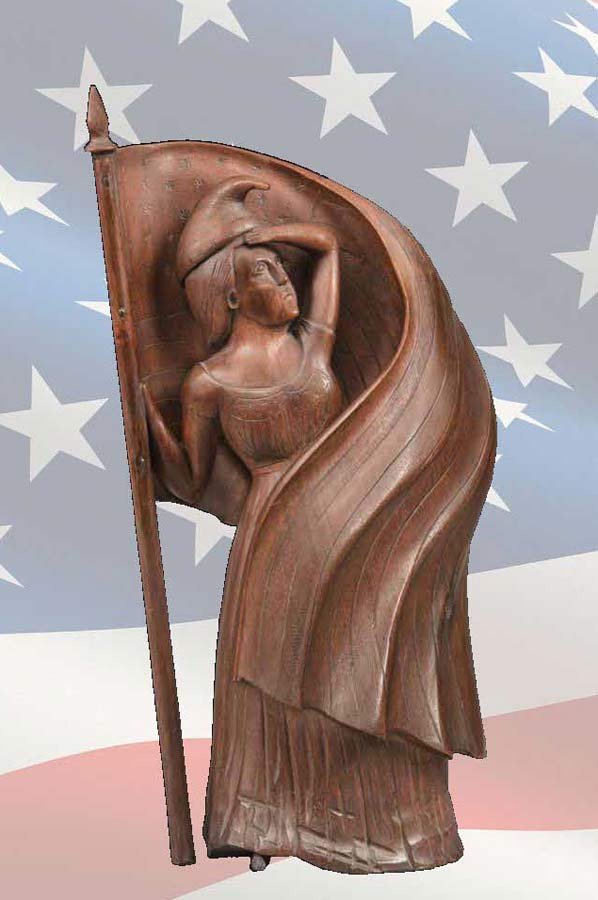
The Goddess of Liberty Wrapped in the American Flag
American, circa 1850
Carved walnut with a mellow, old surface.
15 x 7 x 3 inches
Among the rare nineteenth-century carvings of the Goddess of Liberty—typically static in form—this example stands apart for its remarkable sense of movement and animation. The figure’s dynamic presence and flowing treatment of the flag elevate it well beyond the ordinary, marking it as a truly iconic work within American folk art.
Provenance:
The collection of Barbara Johnson
Exhibited:
Liberties with Liberty: The Changing of an American Symbol, The Museum of American Folk Art, New York, 1986; traveled nationally
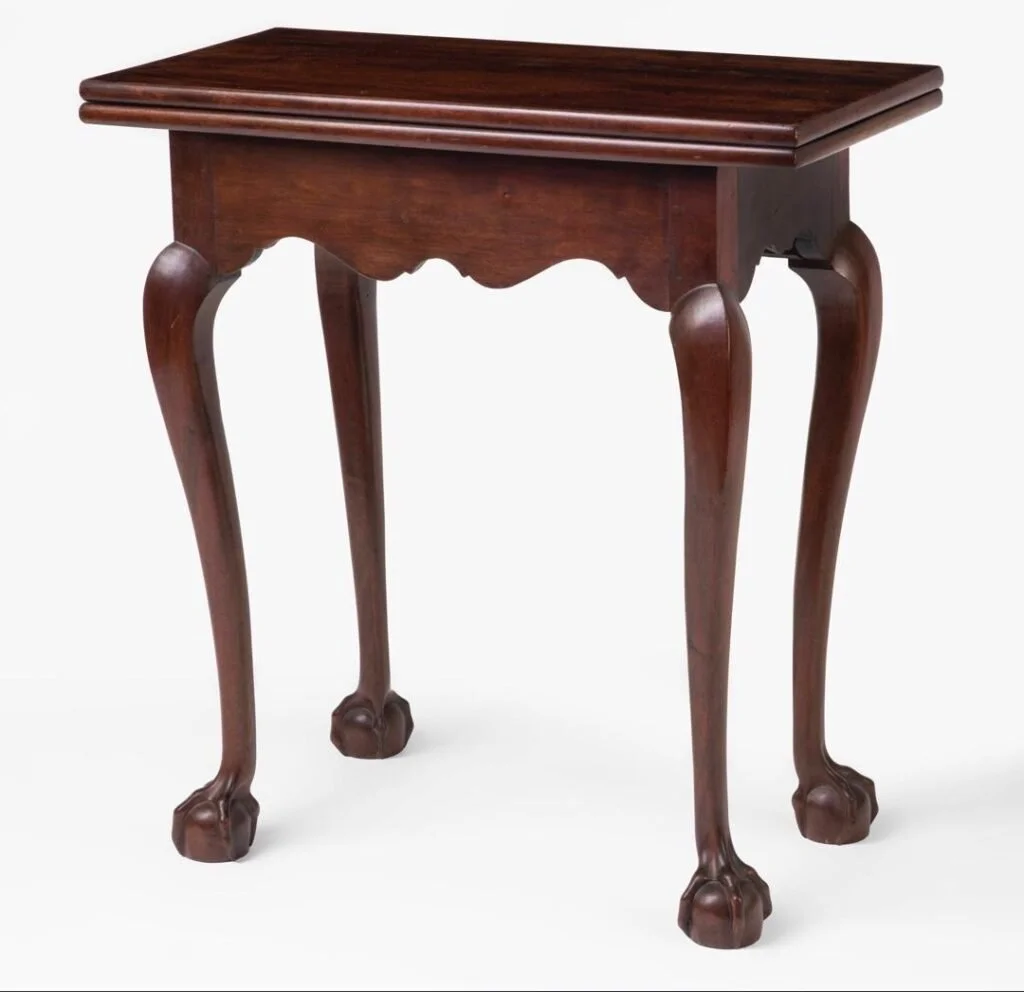
A Diminutive Chippendale Card Table
Probably Essex County, Massachusetts, circa 1760–1785
Mahogany with white pine secondary; original brass hinges. Old repair to crack in front leg; polished surface.
Height 28 inches; top: 28 ½ x 13 inches; base: 20 ½ x 11 ½ inches.
Of notably small and desirable scale, this Chippendale card table features a boldly overhanging rectangular top above cyma-scalloped aprons and cabriole legs terminating in finely carved claw-and-ball feet. The sharply defined, pointed knees are characteristic of furniture attributed to Essex County, Massachusetts.
Provenance:
Probably with Jess Pavey, Birmingham, Michigan;
Private collection
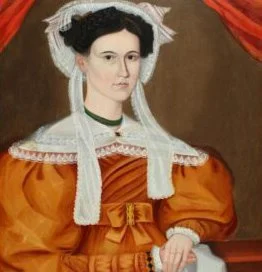
The Ainsworth Girl
Origin: Probably New England
Circa: 1830 Materials & Dimensions: Oil on canvas. 34 × 28 inches
Description:
This striking portrait depicts a young woman in a vivid orange dress, accented by a lace bonnet and collar and a distinctive green choker. Her direct gaze and poised presence give the work an immediacy and refinement rarely encountered in naïve portraiture.
The painting takes its name from its discovery at the Ainsworth house in Medina, Ohio. Though the artist remains unidentified, works of this calibre—combining bold colour, compositional confidence, and strong personality—are exceptionally rare within the tradition.
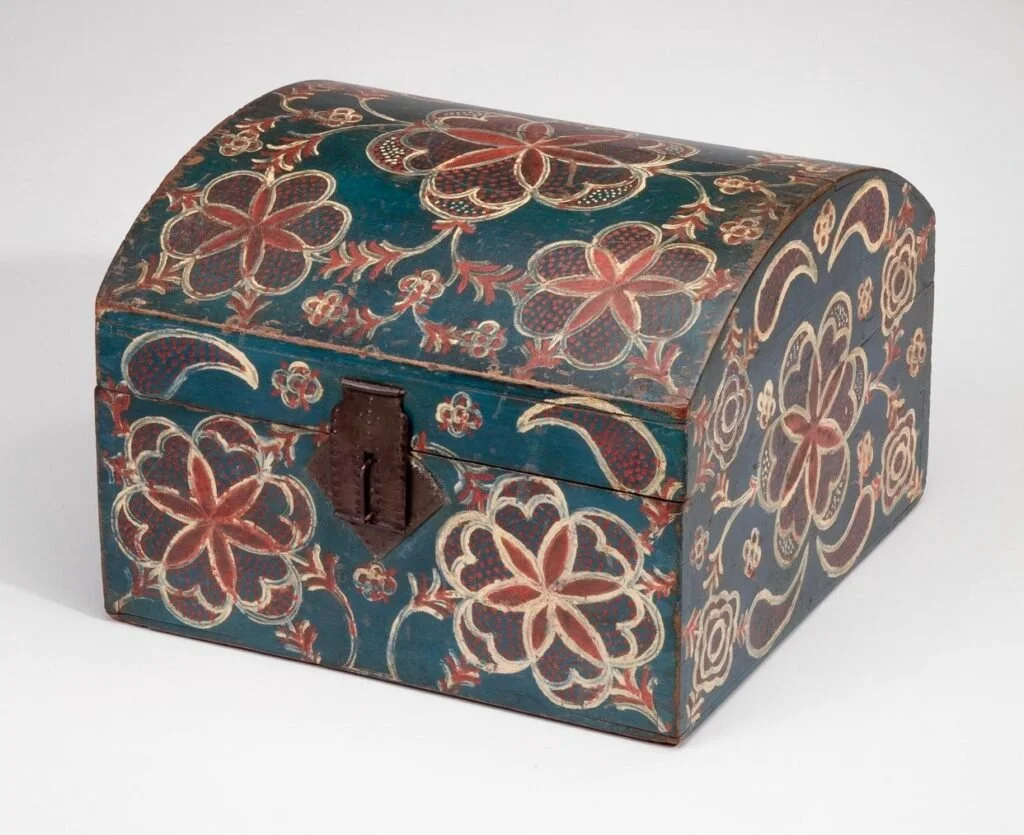
“The Compass Decorator,” Paint-Decorated Storage Box
Lancaster County, Pennsylvania, circa 1800–1840
Poplar with original painted decoration; tinned iron hasp and hinges.
8 ¼ x 11 x 11 inches
This dome-top box is attributed to the anonymous artisan known as the “Compass Decorator,” named for the precise, compass-drawn pinwheel and floral motifs that define his work. His output includes a small but distinctive group of boxes and chests, all marked by confident geometry and finely executed painted surfaces.
Provenance:
Distinguished private collection